
The Heart of American Performance: Buell 1190cc V-twin Engine (Ep. 3)
Episode 3: From Grid to Street - Race-Bred Power for Every Rider
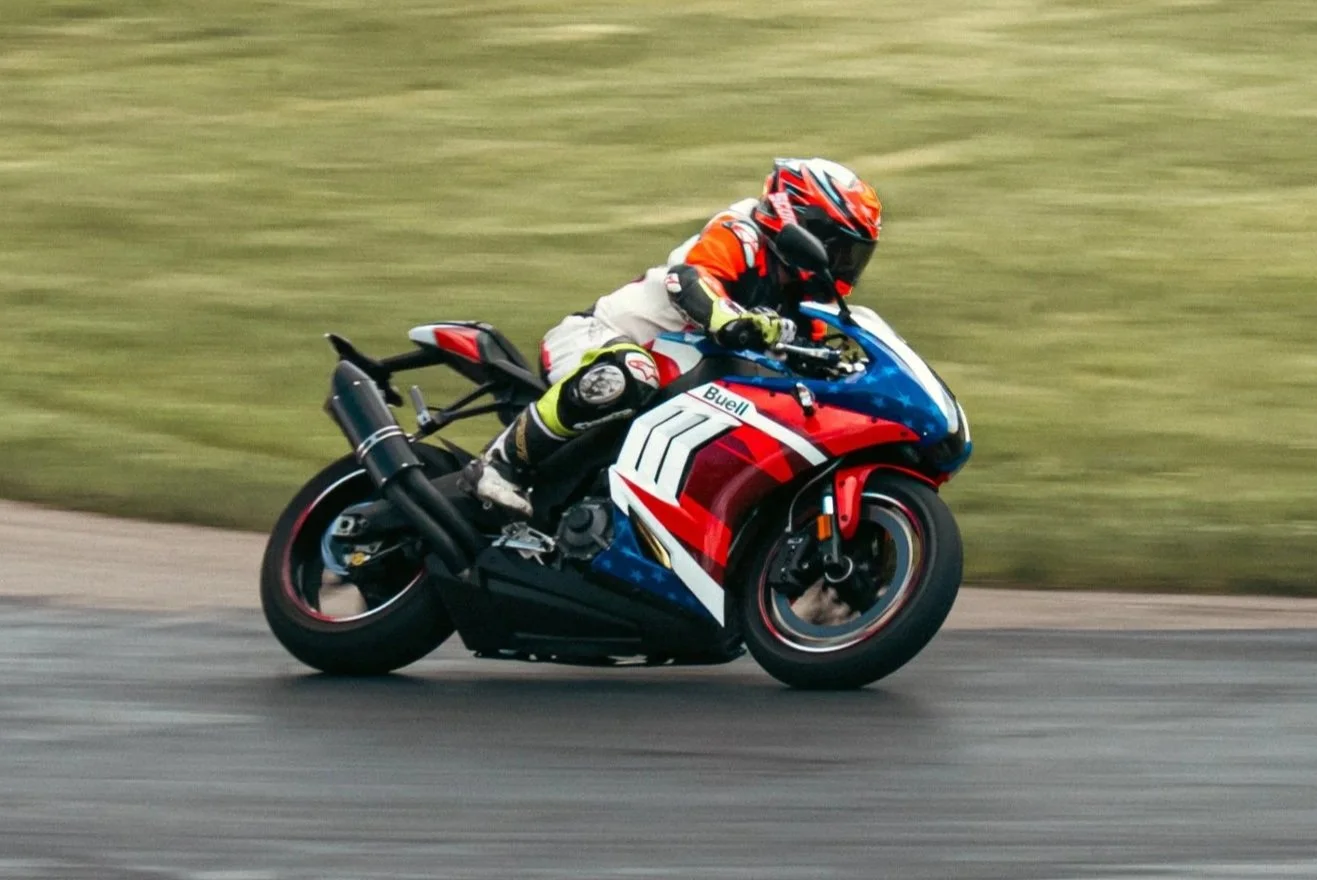
2026 Buell Hammerhead 1190 featuring the Buell 1190cc V-Twin Engine
Welcome back to our new series, The Heart of American Performance: Buell 1190cc V-twin Engine, where we open up the casing on our 1190cc liquid-cooled engine platform in pursuit of understanding where we’ve been and where we’re headed. This third episode traces how decades of high-stakes competition forged the current 1190cc V2 V-Twin engine platform we carry today.
Leading our technical analysis is our very own expert on all things Buell, Ed Laben. Since the late 1990s, Ed has provided the engineering heartbeat for every chapter of Buell’s engine history. His expertise in grid-to-street translation was instrumental in moving the 1190cc platform from a high-compression racing experiment into an industrialized production standard.
Today, Ed continues that legacy by overseeing the domestic precision and reshoring efforts that ensure the 1190 platform remains a vetted staple of American manufacturing.
HERITAGE NOTE: The Buell journey is rooted in a rich lineage of American engineering and collaborations. We honor every relationship - past and present - whose support has been instrumental in the enduring legacy of the American Superbike.
The Philosophy of the High-Performance Environment
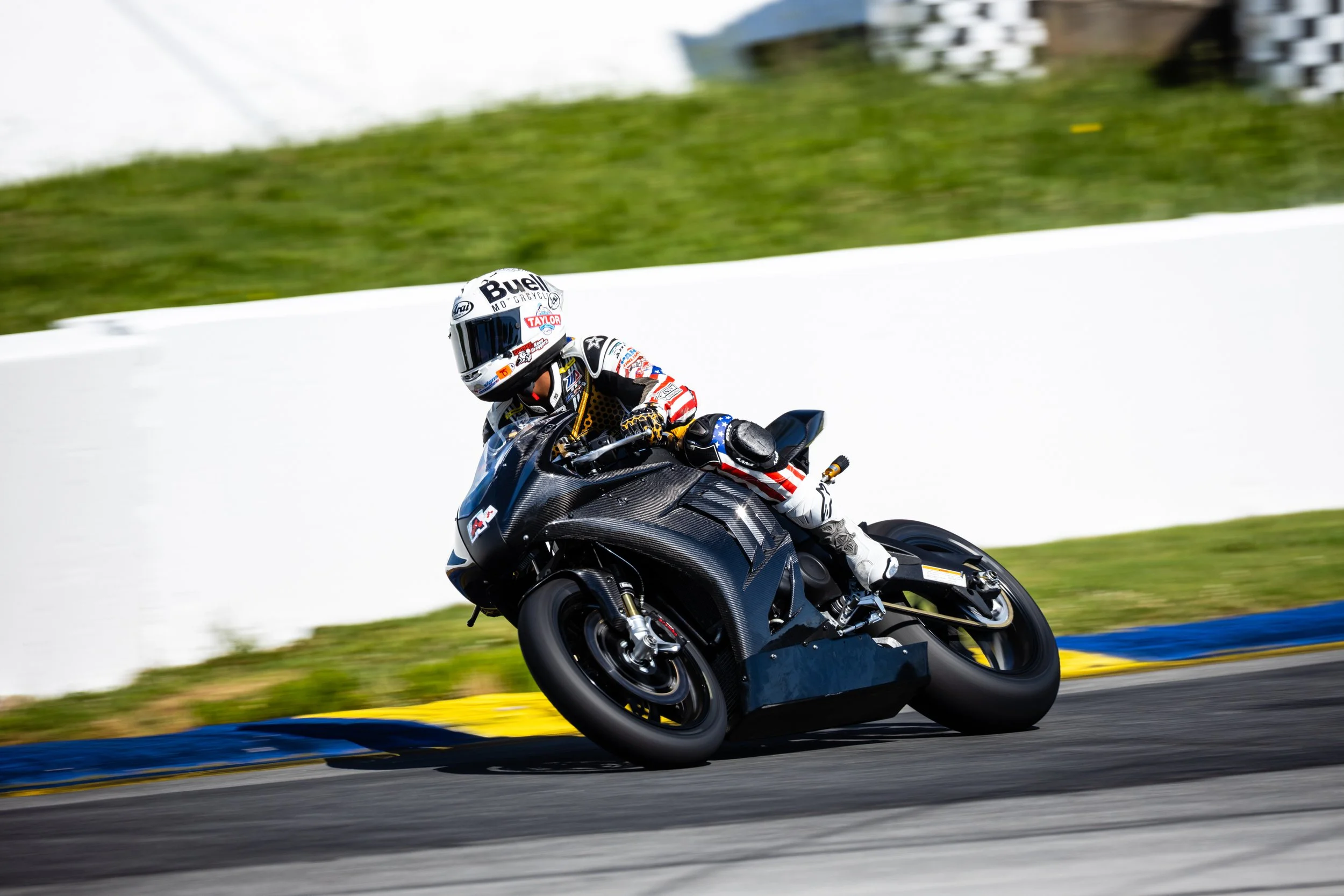
Buell Hammerhead 1190 at Michelin Raceway Road Atlanta with Derek Sanchez - AMA Talent Cup Rider
Erik Buell believed that the track was the best environment for riders to find the absolute limit of a component. Each lap became a test for fine-tuning efficiency, durability, and reliability.
By subjecting the organization to testing stresses on the grid, Buell’s team identified failures in the product’s initial stages before models were released to the public. In particular, Ed notes that Erik’s preferred environment for his team became a catalyst for greater creativity, while a hard deadline ensured the project wasn’t over-tinkered before being sent to the track.
“Erik didn’t over-stress you, but he made sure everyone had a little bit more than they were comfortable with [and] racing metaphors were what he used to make sure the team had things wrapped up,” recounts Ed. “If you wanted to tinker [and you ran out of time], you had to do it for the next race.”
Racing Battles That Built the Brand
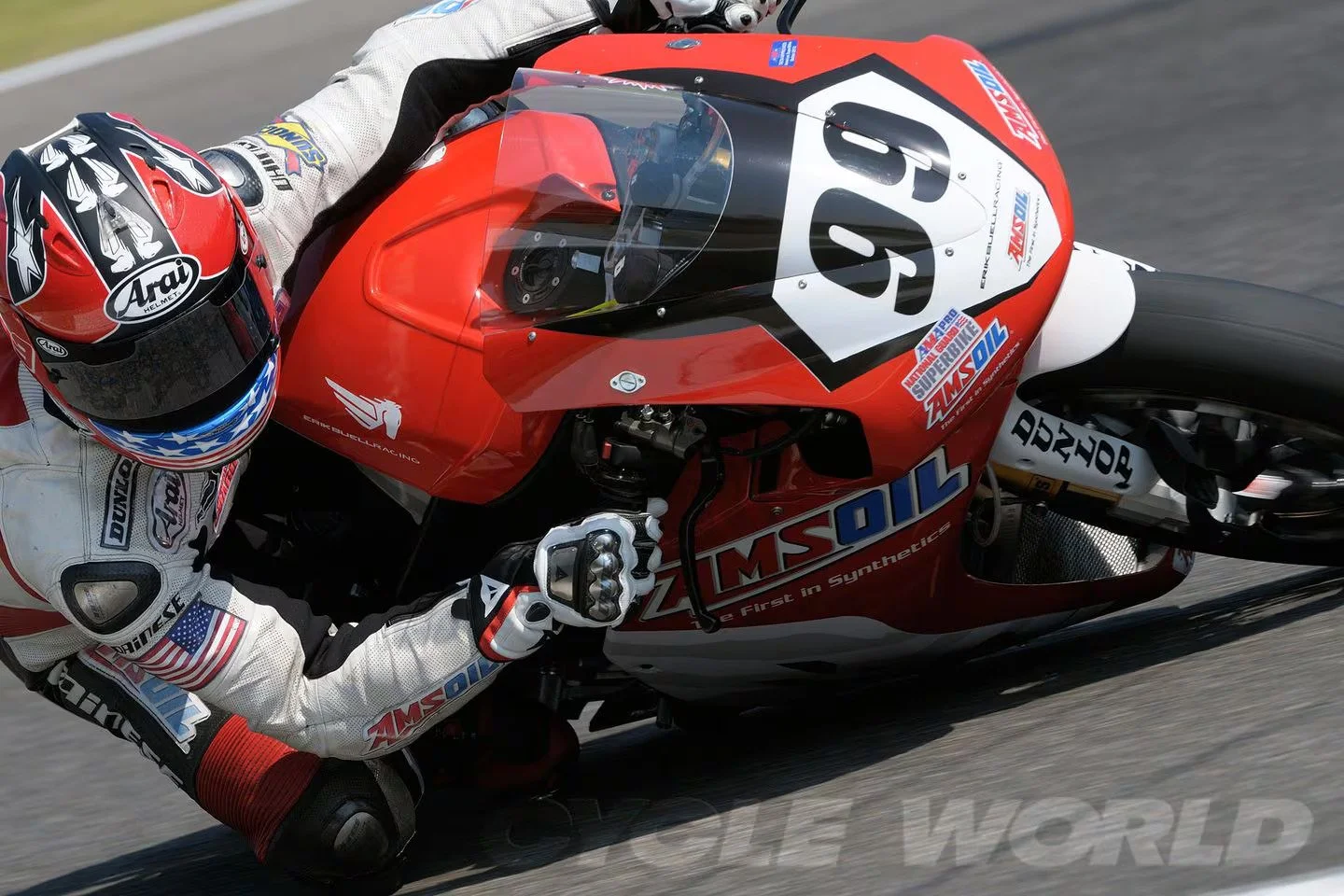
Geoff May on the Buell 1190RS racing AMA Pro SuperBike - 2011 (via cycleworld.com)
Buell’s history is defined by its role as a disruptive outlier. By forcing the industry to adapt to American innovation, the 1190cc V-Twin platform matured through some of the most competitive eras in modern racing. In particular, the journey from the 1125R to the 1190RX was a chronological evolution of power and intent.
Here’s a further breakdown of the series in which the following platforms proved their mettle:
| Machine | Series / Years | Success & Key Highlights | Technical Challenges & Lessons |
|---|---|---|---|
| 1125R | AMA Daytona SportBike (2009) |
2009 Championship Win Danny Eslick proved the Helicon's massive torque could dominate the 600cc field with zero mechanical DNFs. |
Performance Parity Friction The team faced a 20lb weight handicap and a 140 horsepower rolling dyno limit. High heat and “cranky” fuel-mapping led to the development of modern CFD-optimized porting. |
| 1190RR | Sound of Thunder (2010–2011) |
European Title (Pegasus Team) Validated the bored-out 1190cc engine (14.25:1 compression) as a world-class powerhouse. |
Hybrid Chassis Instability A half-and-half build using 1125R frames with 1190 internals. The lack of refined electronics for 185+ horsepower catalyzed the shift to dedicated 1190 castings. |
| 1190RS | AMA Pro Superbike (2011–2013) |
Regular Podiums / 2012 Race Win Moved Buell into the “Superbike Elite” by beating factory budgets 10x its size. |
Radical Geometry The 22° rake made the front end “nervous,” as described by riders of the time. Maintenance costs and “pushing” in corners forced refinements in chassis rake and the ZTL brake system. |
| 1190RX | WorldSBK (2014–2015) |
First American WSBK Points Earned the first-ever global points for an American brand (Larry Pegram) on the world stage. |
Industrial Scaling Issues Struggled with frame weight and electronic “gremlins.” WSBK stress resulted in the current streamlined wiring and back-purge welded headers. |
The 1125R (2009)
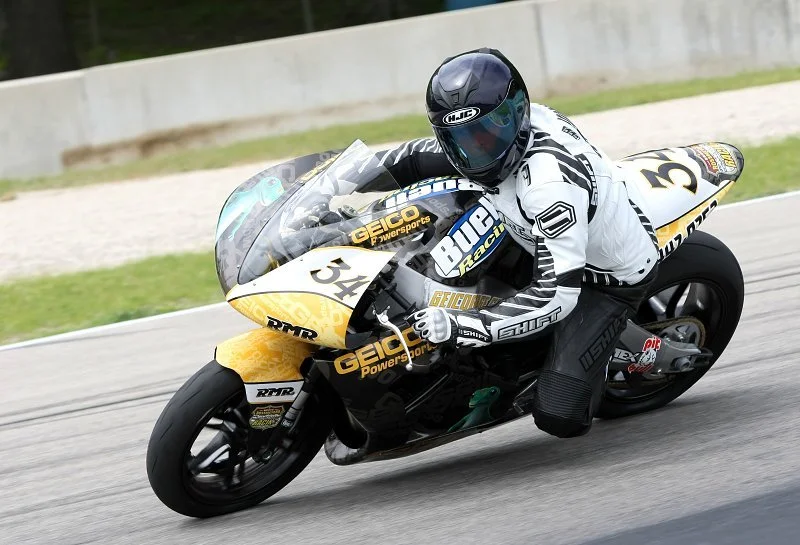
Buell 1125R (via motorcycledaily.com)
The AMA Pro Daytona SportBike saw the debut of Buell’s Helicon engine. Competing in a field of 600cc Inline-Fours (such as the Yamaha R6 and Suzuki GSX-R600), the 1125cc V-Twin Helicon faced a 20lb weight handicap and a 140 horsepower rolling dyno limit to maintain performance parity. Despite being “cranky” in technical sections due to more turbulent thermal management and fuel-mapping, the 1125R’s torque dominated the championship.
This era saw the refining of the 1125R’s Vacuum Assist Slipper Clutch (VASC), allowing for aggressive downshifts without rear-wheel hop.
The 1190RR (2010–2011)
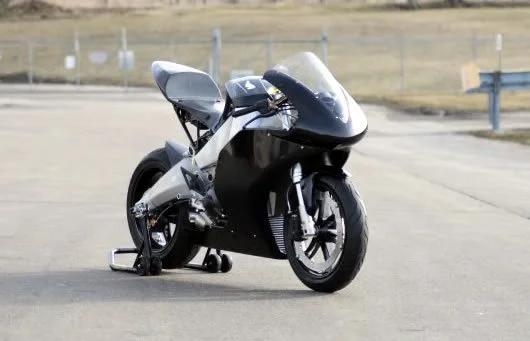
Buell 1190RR (via thekneeslider.com)
A race-only transition bike that used a 1190cc bored-out Helicon engine, introducing titanium intake and exhaust valves and a high 14.25:1 compression ratio. The 1190RR proved its worth in the European Sound of Thunder with the Pegasus Race Team, a specialized open-capacity racing series in Europe (primarily Germany) for non-Japanese brands. EBR’s 1190RR would go on to win the championship, proving that the American V-Twin could outperform the best of the European big twins.
The 1190RR’s half-1125/half-1190 chassis would proceed to be a catalyst for the development of the dedicated 1190 castings used today.
The 1190RS: (2011–2013)
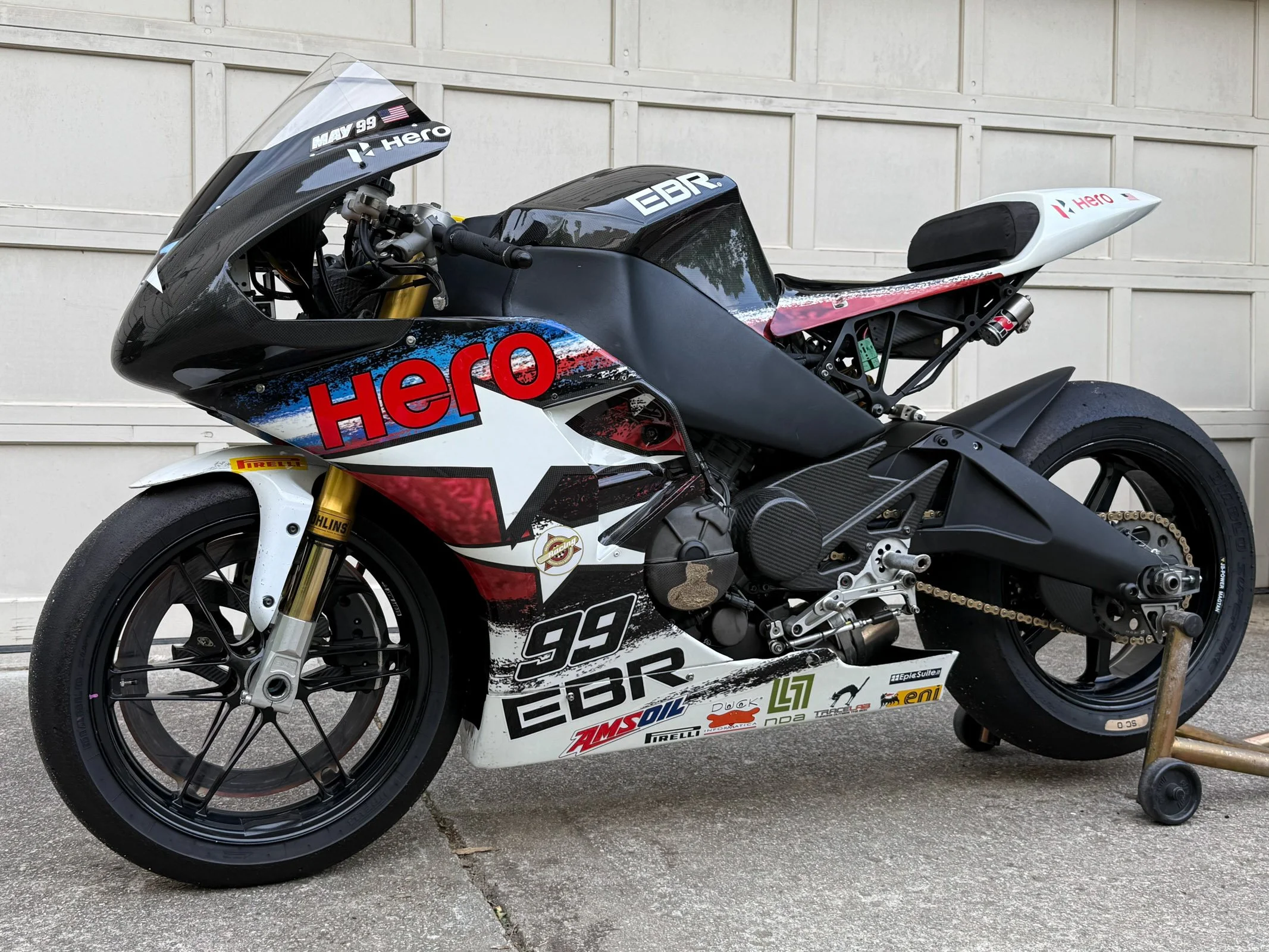
2012 EBR 1190RS (via iconicmotorbikeauctions.com)
In 2012, this carbon-fiber entry took a historic race win in the AMA Pro Superbike class against factory budgets 10x its size. At this point in the platform’s evolution, engineers implemented lighter engine covers and carbon fiber ducting to lower the bike's center of gravity, as well as an exceptionally steep 22° rake for better flickability in tight corners.
Feedback from that aggressive rake at triple-digit speeds served as the final R&D for the more stable, planted chassis geometry utilized in the modern Hammerhead 1190.
The 1190RX (2014–2015)
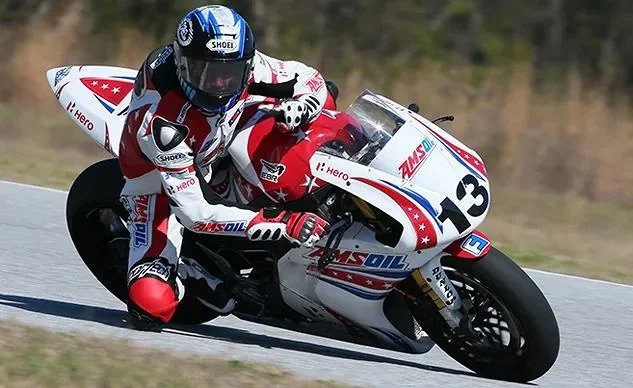
Cory West on Buell 1190RX (via motorcycle.com)
The 1190RX represented the world’s first American factory entry in WSBK, the most advanced production-based racing series in the world. This earned Buell the first global points for an American bike, though the model’s fuel-in-frame chassis was heavier than that of its competitors.
Era improvements focused on electronic integration, utilizing an updated ECU to manage the high-stress demands of a globally-recognized grid.
Decisions made in this series led to streamlined wiring, back-purge welded headers, and refined cooling systems that anchor the reliability of Buell’s current 1190cc platform.
Race-Spec for the Street
Within the Buell 1190cc platform, “Race-Spec” has always referred to specific, vetted componentry from partners and firms that have dominated and continue to frequent the podiums of F1, MotoGP, and WorldSBK. The table below demonstrates this.
| Component | Street Benefit | Source Location | Racing Heritage (Measured in Years) |
|---|---|---|---|
| Matzinger Rods | Professional-grade reliability under sustained high-RPM operation. | Austria | 39+ Years. A global benchmark for engine internals. These rods have been provided for virtually every F1 grid and MotoGP factory team. |
| CFD-Optimized Porting | Mathematics-driven airflow that eliminated the “on-off” feel of race heads. | Switzerland | 28+ Years. Founded by a GP racer, this partner dominated Moto2 with 3 consecutive Constructor Titles (2010-2012). |
| Slipper Clutch Refinement | Smoother downshifts and more forgiving corner entry on the street. | Switzerland | 28+ Years. The industry standard in WorldSBK and MotoGP. Known for over 400 Grand Prix victories. |
| Back-Purge Welds | Aerospace-grade integrity for headers, preventing cracks under thermal stress. | Buell Domestic Reshoring USA | 40+ Years. Utilized to ensure high-performance headers never “sugar” or crack under racing heat. |
HERITAGE Note: Many of these sources and suppliers have evolved over the years and continue to celebrate movement into the future with new company names, componentry rebranding, etc. Technical partnerships, component suppliers, and corporate entities referenced across this historical timeline have naturally evolved over the years. Many of these original organizations and their respective components have undergone subsequent rebranding, name changes, or corporate restructuring.
The Modern Inheritance: Passing the Torch
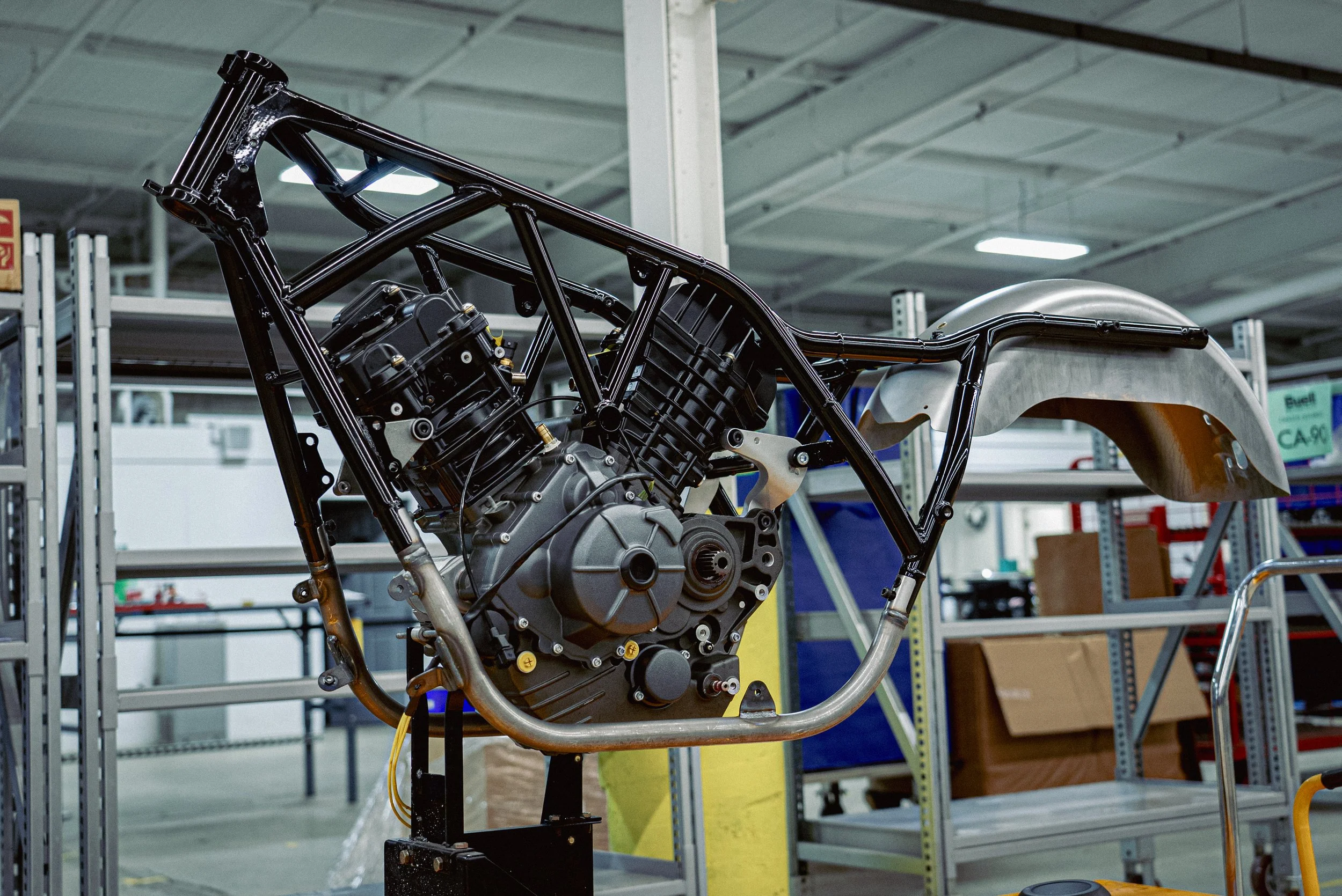
2026 Buell Super Cruiser featuring the Buell 1190cc V-twin Engine
A world-class engine platform is only as powerful as the vision behind its application. Erik Buell and his team built machines that defied convention, pushing the 1190cc V-Twin into new territories. By betting on the next breakthrough, this strategy provided the high-performance DNA necessary to prove the concept of an American Superbike, placing Buell on the AMA and WorldSBK circuits and, most importantly, establishing a grid-proven engine architecture designed to disrupt conventional models of the time.
Erik Buell built our heritage on pure innovation and a drive to push boundaries. That drive is the bridge between where Buell has been and where it is headed. CEO Bill Melvin carries it forward with a different and more precise innovation style, one aimed squarely at building a brand that can scale. He read a market others overlooked and then did the work to deliver it, pairing an American cruiser with sportbike DNA and the production strength to put real bikes under real riders.
When Bill took the helm, he gave Buell a clear path to the future, generating an opportunity for Buell to become the American-built motorcycle OEM the industry knows it can be. Today, Buell’s unmatched engineering flows directly to the street with the Hammerhead 1190, the naked 1190SX, and the disruptive Super Cruiser, with the SuperTouring soon to be added to that lineup.
With a clear path forward, Buell will continue to put the rider at the center of the machine.
Still uncompromised. Still evolving. Never standing still.
This is Buell.
American Alliances: Domestic Support & Partnerships
Components continue to be sourced domestically wherever possible. On the Super Cruiser specifically, componentry benefiting from that country-wide support includes:
Memphis Shades front fairing (Tennessee, USA)
Saddlemen Seat (California, USA)
Dunlop Tires (New York, USA)
Fox Factory suspension package (California, USA)
Frame sourced from Pennsylvania, USA
Tanks sourced from Michigan, USA
Buell Motorcycle Co. is proud to partner with these organizations to contribute to the future of the enduring legacy of American manufacturing.