
The Heart of American Performance: Buell 1190cc V-twin Engine (Ep. 1)
Episode 1: From the Buell 1125 to Today’s 1190 Engines
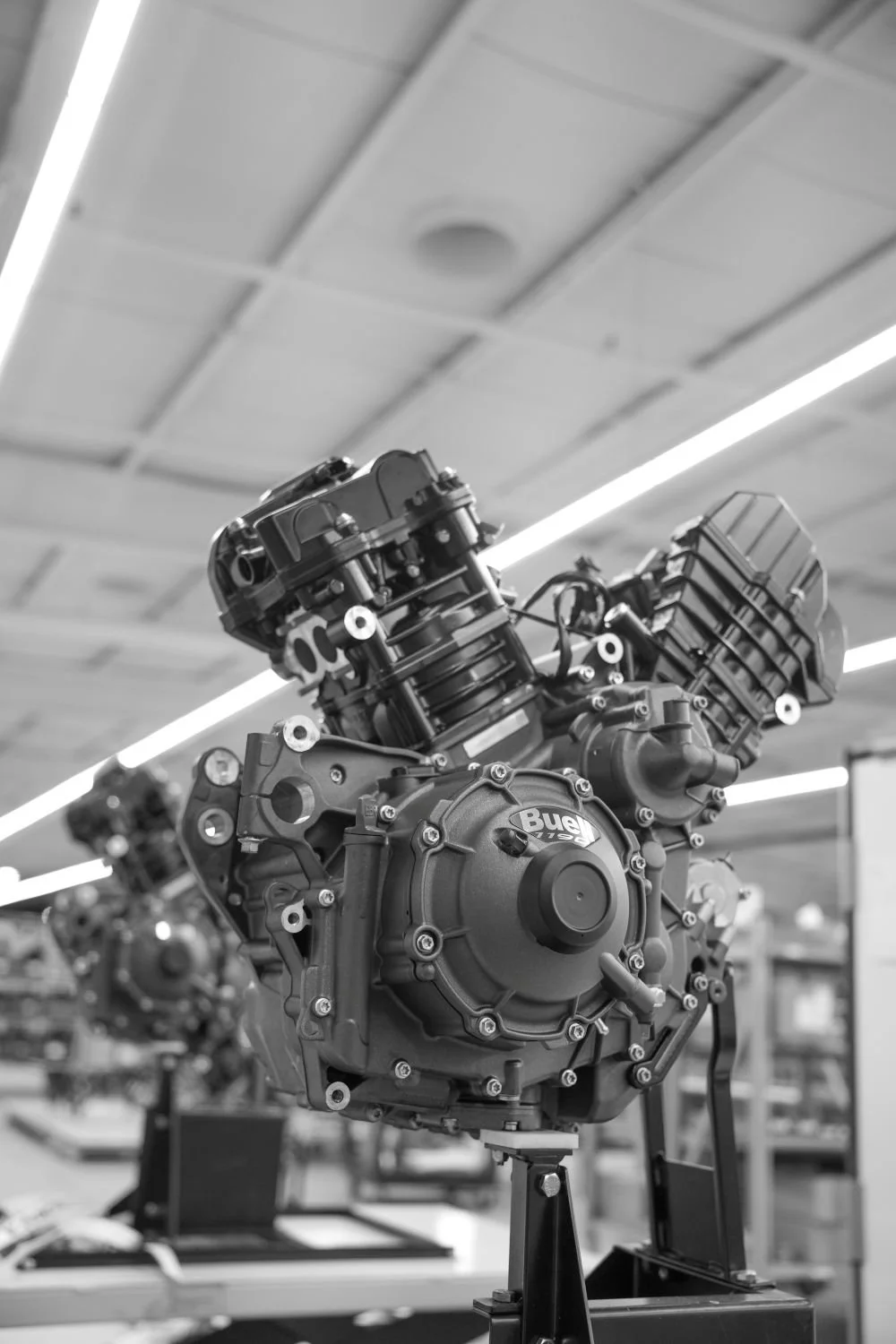
Buell 1190cc V-Twin Engine
We're diving into the heart of our machines with a new series showcasing the 1190cc Liquid Cooled V-twin Buell engine: How our technology came to be, and what today’s machines carry.
Leading the charge on this monumental project is a core member of Buell’s team, Ed Laben. Ed has worked with Buell since the 1990s as a supply chain expert, engineering team member, and now valuable long-term consultant. Ed started his Buell journey on loan from Harley-Davidson before falling in love with Buell's mission and joining full-time in 2004. Ed’s talents have moved through multiple areas of our company over the years, establishing his contributions as the reputable voice of authority on all things Buell.
In this first installment, we dive into the history of the 1125 engine that inspired today's high-performance liquid-cooled 1190cc V-twin.
HERITAGE NOTE: The Buell journey is rooted in a rich lineage of American engineering and collaborations. We honor every relationship - past and present - whose support has been instrumental in the enduring legacy of the American Superbike.
TECHNICAL NOTE: Rear Wheel Horsepower (RWHP) is the standard for track machines and measures output at the asphalt after drivetrain losses. Brake Horsepower (BHP) reflects the raw output of the engine at the crankshaft. Unless specifically noted, all power specs for production models in this series are rated in BHP.
The period is 2004-2009. At this time, Harley-Davidson was one year into its ownership of the Buell brand in a relationship that had existed for nearly a decade. Within this structure, a new world of American superbike performance potential opened under several project names. One of these projects led to Buell’s breakaway from the Harley-Davidson-based air-cooled, 45-degree V-twin engine architecture that had been at the company’s core up until that point.
The Birth of the 1125: Loki II, Helicon, and the Barracuda
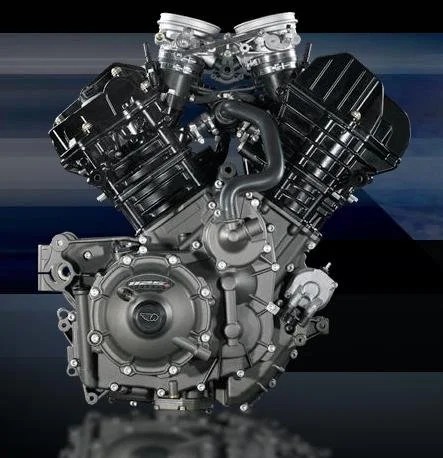
Buell 1125 V-Twin Engine
The initial project that created the 1125 platform was code-named Project Loki II. Under this project name, Buell and Rotax worked out of Austria on developing liquid-cooled solutions for powertrains and marrying those results to more efficient fuel and engine systems. This step had been initiated in the later stages of the first Loki Project of the late ‘90s, but never fully realized.
Together with Rotax, Project Loki II led to the creation of a whole new Buell heart: The 1125 Helicon engine. The Helicon was Buell’s answer to the demand for a high-revving, liquid-cooled sportbike powertrain. Placed inside a fuel-in-frame chassis, power was amped up to 1125 cc’s, 125 at the rear wheel (RWHP), or 146 hp (BHP). The resulting bike was known internally as the Barracuda, later christened as the 1125R when published to markets commercially.
Ed recounts other design specifications and constraints at this point in the company’s 1125 engine development:
“[Leadership at the time] never wanted to compete head-to-head with the Japanese liter bikes, so this kind of pushed Buell and Rotax’s results to be over 1000cc, and it couldn't be a fully-faired superbike, says Ed Laben. “This is one of the reasons that the 1125 ended up with those weird gill-radiator packages on the side.
If it had been a fully-faired bike, those packages wouldn't have been necessary because we would have been able to duct the cooling air to the radiators without all that extra stuff.”
The release of the 1125R in 2008 and the 1125CR in 2009 created a unique pocket of superbike power in the American-made motorcycle market of the time.
It was also at this point in the timeline that talks with Rotax were initiated to increase the power potential of the 1125 even further.
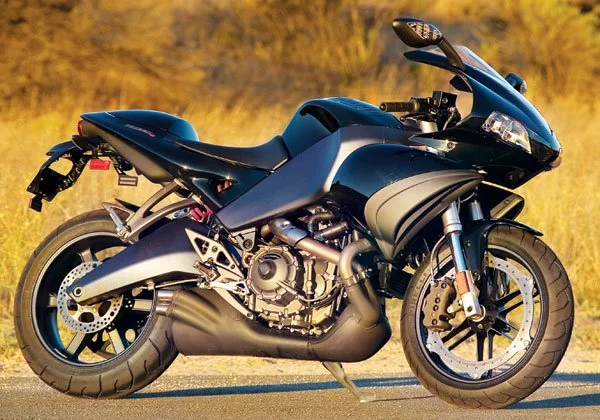
2008 Buell 1125R
SUMMARY:
Project Loki II was a program founded to develop liquid-cooled powertrains, which birthed the 1125 Helicon engine.
Barracuda was the project name for the bike built to house the 1125 Helicon engine. This same bike was later christened as the 1125R when published to markets.
Throughout the publishing of the 1125R, work was already underway to realize the next stage in the 1125’s evolution, the Barracuda II.
The 1125’s Unrealized Evolution: Barracuda II
Though never released to the public, the Barracuda II was the answer to Erik’s passion for power. This project was designed to be the next stage in Buell’s evolution of the ultimate American superbike.
Around 2007, while work was underway on commercializing the first Barracuda, the 1125 Helicon engine was also evolving into a higher-output competitor. Buell provided their 1125 powertrain to Swiss racing technologies company Suter Racing in 2007, through Rotax, for R&D support in the pursuit of uprated race-spec power potential.
“Erik was always a little disappointed in the horsepower… the 1125 was about 125 RWHP at the time, and we were working with Rotax to try to improve that,” adds Ed. “We needed the engine to get over 140 horsepower, so around 2007, Rotax contracted with Suter Racing Technology in Switzerland to do some work on the platform and to see what they could develop out of it.
The 1125’s intake was modified, and compression was tracked up along with other work, and the 1125 was able to put out around 165-170 RWHP in racing trim.”
While the final prototype was successful, Erik Buell pushed as far towards racing-spec results as he could in the Barracuda II’s early stages of development. The planned production model would have featured advancements like full fairings, a conversion to chain drive, phased intake valves to improve combustion for higher compression, and, of course, a projected spike in power to 152 horsepower (BHP).
Despite being primed for Buell’s 2011 model year (late 2010), Project Barracuda II would never see the market. The Barracuda II’s upcoming release was brought to a halt in 2009 when Buell was divested from Harley-Davidson, leading to the liquidation of all Buell assets, including approximately 500 of the company’s 1125 Helicon engines.
The batch of Helicon powertrains to emerge from this chapter would remain dormant in East Troy until EBR was founded in 2010. The next year and a half saw Erik’s teams upcycling these same Helicon engines in pursuit of Buell’s most powerful platform yet: The 1190RR.
SUMMARY:
Project Barracuda II was the code name for the 2011 model year evolution of the 1125 platform, which never launched. This project was designed to be Buell’s first fully-faired, race-spec American superbike.
Higher Output R&D of the 1125 Helicon engine began as early as 2007, with Buell and Rotax partnering with Suter Racing in the bid to push the Helicon engine to its full potential. Suter was able to use testing to get the Helicon to a significant 165-170 RWHP in racing trim.
Upon nearing debut, production advancements for the Barracuda II showed 152 hp (BHP), as well as a transition to chain drive, phased intake valves, and a move away from "gill" radiators to a fully-faired aerodynamic package.
The 2009 Divestment halted the Barracuda II project just before its 2010 debut, leaving a stockpile of approximately 500 model year 2010 Helicon engines dormant in East Troy. These same Helicon engines eventually became the primary resource when developing EBR’s new flagship 1190cc V-twin and track-only 1190RR.
EBR’s Golden Years: Converting the Helicon into a Race-Ready 1190 and the Emergence of Project Infineon
When Erik Buell established Erik Buell Racing (EBR) in 2010, the company was limited to building track-only bikes for one year.
“When Erik started Erik Buell Racing (EBR), he had an agreement with Harley to build race bikes only for one year. The ~500 1125 Helicon engines in East Troy were the engine supply that we started working with,” supplies Ed. “The first 1190cc V-twin engines - the ones used for the 1190RR, then later the 1190RS - were all built out of dismantled 1125 engines.
We recycled everything ourselves. We took 1125 cylinders, bored out the extra three millimeters... We took the cylinder heads, milled big chunks out of them, using a CNC machine to develop the new port shapes… we did everything ourselves.”
Thanks to the readily available supply of 1125 engines in East Troy (ET), EBR’s team was able to establish itself and pivot with speed and efficiency. The unsold inventory of Helicon 1125R engines leftover from model year 2010 became the starting point for the creation of the 1190cc V-twin engine platform, which went on to fuel the track-only 1190RR, capable of 185 RWHP. The 1190RR was released within a year after EBR’s establishment in 2010, setting a firm and uncompromising statement of intent to the public for the busy years to come.
One year later, Erik needed a street machine to be eligible as a base for AMA Superbike Racing. This led to the creation of EBR’s 1190RS, EBR’s very first 1190cc street bike, rated at 185 BHP - the first of many street-legal motorcycles to come out of EBR under this platform.
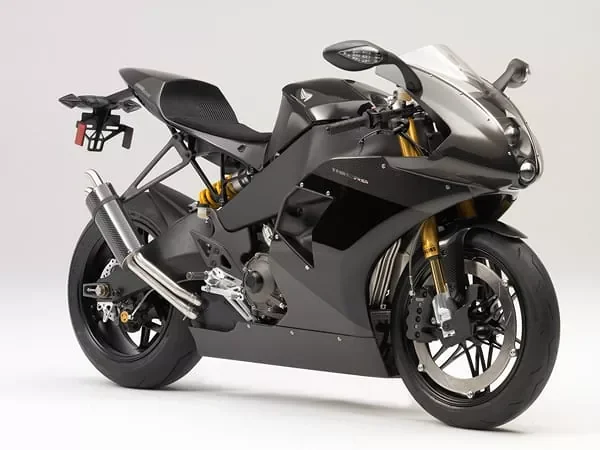
2011 Buell 1190RS
By 2011, Hero MotoCorp emerged as the leading EBR customer. Drawn by Erik's unrelenting passion for high-performance engineering, Hero began partnering with EBR to fund projects of their own in pursuit of entry into American markets. Under Hero's substantial business with EBR, the team created a vast range of powertrains and machines. The margins earned by Hero's business led to the industrialization of the 1190cc V-twin platform.
Thanks to a fully optimized supply chain for a new, even more powerful engine, the next chapter of the 1190cc platform’s evolution was created under Project Infineon. The residual bike under this new movement was known internally as the RX11 and later commercialized as the 1190RX.
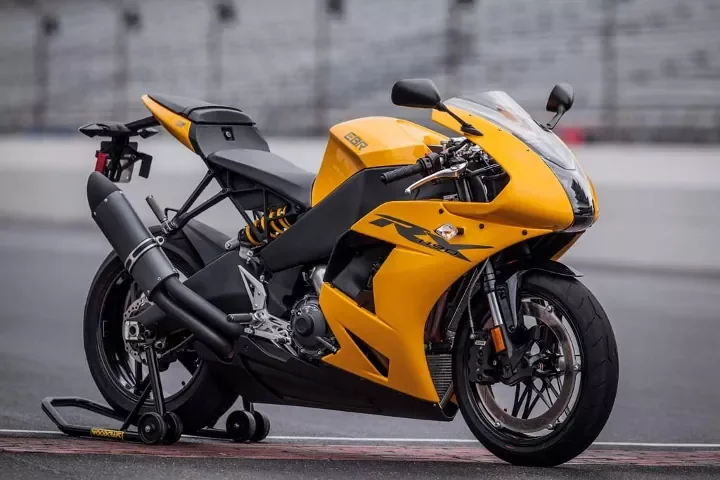
2014 Buell 1190RX
“Hero started by funding some of the projects that we did for them... [and] those projects funded basically all the early development of the RX11 (released as the 1190RX) and the industrialization of the 1190cc platform,” Ed adds. “At this time, the 1190RX’s cylinders and the connecting rods came from Austria, along with the cylinder heads. EBR also continued with the crankshafts from Bavaria, Camshafts came from Germany, etc.
We sourced the highest-quality components we could, and we had the funds to do so.”
Buell transitioned its positive relationship with Rotax to focus on specific engine technologies. This allowed Buell to maintain continuity while fully assuming ownership and control of the engine’s design, development, and future evolution.
SUMMARY:
EBR’s first bikes - the 2011 1190RR (185 RWHP) and 2012 1190RS (185 BHP) - were created by upcycling the dormant East Troy inventory of 1125 Helicon engines.
Within EBR’s Golden Era, the 1190cc V-twin moved from a hand-modified race engine to a fully industrialized, world-class powertrain without compromising on the high-performance materials that went into the bespoke RS. Internally, EBR called the two-wheeled results of this era the RX11; it was known commercially as the 1190RX (185 BHP).
It was during this chapter in the 1190cc platform’s evolution that top-spec race componentry defined the EBR’s ET V-twin. Every internal component met the elite standards required for international superbike competition.
The industrialization of the 1190RX established the technical DNA for today’s 1190cc V-twin platform.
2014-2025: The Pivot to Sustainable Growth
In the period between late 2013 and early 2014, Hero Motocorp refocused on home markets. All projects in export markets were cancelled, including the development department connected to EBR. With the sudden withdrawal of support, all projects were left unfulfilled, including that of the 1190cc V-twin.
EBR filed for bankruptcy in April 2015, leading to the private purchase of all assets the following year, on January 19, 2016. The new company continued producing motorcycles under the EBR Motorcycle brand until 2020, when the Buell trademark was re-secured and Buell Motorcycle Co. was reborn. During this time, the company underwent a complete overhaul. In February of 2021, Buell resurrected marketing campaigns to announce the company’s official rebirth, including the release of the Hammerhead 1190 (185 BHP) and the 1190SX (185 BHP), a naked variant.
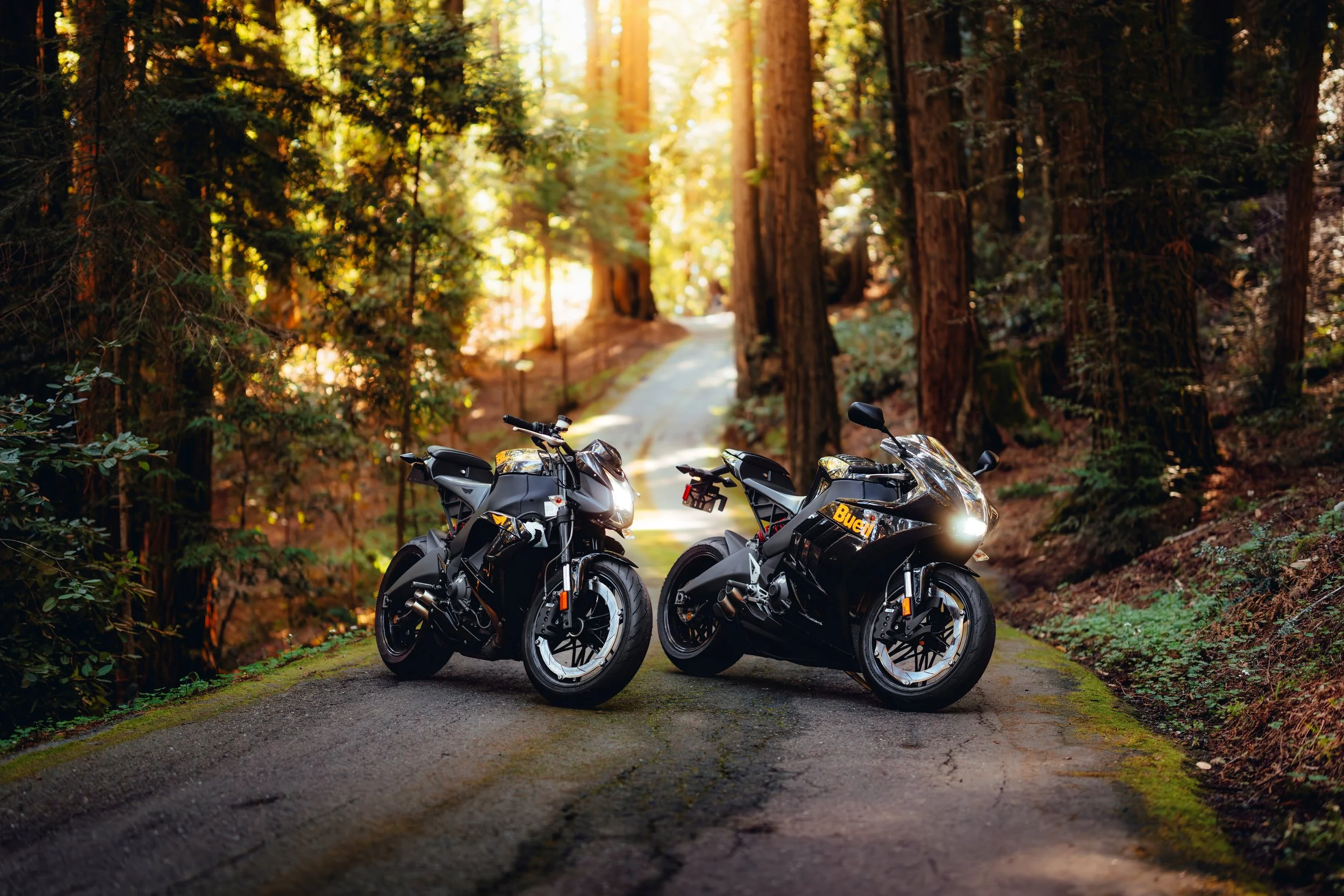
Buell 1190SX & Hammerhead 1190 - Powered by the Buell 1190cc V-Twin engine
Between 2016 and 2021, focus turned inward to rebuilding the company’s foundation. This included optimizing the supply chain that would carry the company into a new chapter, uprating components whenever possible. This included the continual replacement of molds and castings bearing the Rotax name, and transitioning to that of Buell Motorcycle Co.
Ed recalls this particular chapter of movement for the supply base between the EBR-era’s finale with the 1190RX (which ended in 2014) and the resurgence of the 1190cc platform in 2021:
“At this time, some suppliers decided to drop out after a couple of rough starts, while others changed their business policy. We had to react to those changes by reallocating some of the powertrain’s parts to other suppliers. However, for those very specific components that are high-performance (light alloy engines), we're still sourcing from the best in the world,” Ed explains. “For instance, the 1190cc V-twin crank case castings are machined here in Minnesota (USA).
Our country has an established industrial expertise in machining of aluminum, steel, gear making, heat treating, etc., and we're working to look at domestic options and taking as much advantage of that as we can. In most cases, we've been able to find amazing sources here, in our domestic community."
As the Hammerhead 1190 and 1190SX make room for the development of the Super Cruiser and SuperTouring, Buell continues to establish a model centered around long-term business sustainability and mechanical reliability. Today, Buell Motorcycle Co. reaches further efficiency through intelligent choices of partners and ongoing engine quality improvements.
The evolution of Buell’s high-performance 1190cc V-twin platform continues to inspire riding communities across the country and around the world.
SUMMARY:
The Post-Hero Transition (2014–2021) was defined by Hero’s exit in 2014, which set the stage for the private purchase of Buell assets in 2016 and the subsequent 2021 launch of the Hammerhead 1190 and 1190SX out of Grand Rapids, Michigan.
In 2016, Buell began a major manufacturing pivot, revising key components of the 1190cc V-twin engine platform to improve reliability and smoother operation. This transition included a strategic shift from certain global suppliers to domestic partners where possible in order to support the community while maintaining quality manufacturing processes.
Supply base transitions further refine the 1190cc platform to support Buell’s new flagship model, the Super Cruiser (175 BHP). This is a model that continues to carry the same high-performance personality that riders have come to expect from Buell, with an even greater mix of domestically-sourced components.
Stay tuned for the next installment of our Engine Talks series, where we speak more on differences between the 1125 Helicon engine, the bespoke, race-ready 1190cc V-twin platform of the 1190RR, and the changes that occurred through the industrialization period of EBR’s 1190RX, pointing to today’s 1190cc V2 V-twin.
For all the latest news, updates, and exciting developments happening here at Buell, be sure to visit our growing content archives at www.buellmotorcycle.com.